

Why Workshop Software Should Be Built by People Who Run Workshops
Workshop software is stronger when the people shaping it understand the pressure of a live diary, an interrupted technician, a waiting customer and an owner protecting the whole business.
There is a material difference between studying how a mechanical workshop works and being responsible for one. A product team can interview owners, draw a process map and assemble a convincing feature list. Running the workshop means living with the result when the booking is incomplete, a technician is interrupted, parts are late, a customer is waiting for an explanation and the promised completion time is approaching.
Workshop HQ was designed by its founder and product lead, who owns and has operated a successful Australian mechanical workshop for 13 years and remains involved in its day-to-day operation. That experience does not replace careful product design or testing. It gives every product decision a demanding operating context: will this help reception answer the next call, let the technician keep working, give the customer clearer evidence and leave the owner with a trustworthy record?
This guide explains why operator-built software can produce a more coherent workshop system, how a direct feedback loop should work and what workshops should ask any software vendor before trusting it with the centre of their business.
Key takeaways
- Firsthand operating experience exposes the handovers that a feature checklist misses.
- Reception, technicians, customers and owners need different views of the same repair record.
- Direct founder access can preserve the meaning of workshop feedback and shorten product decisions.
- Fast implementation still needs product judgement, security checks and real-workflow testing.
A workshop is not a collection of independent screens
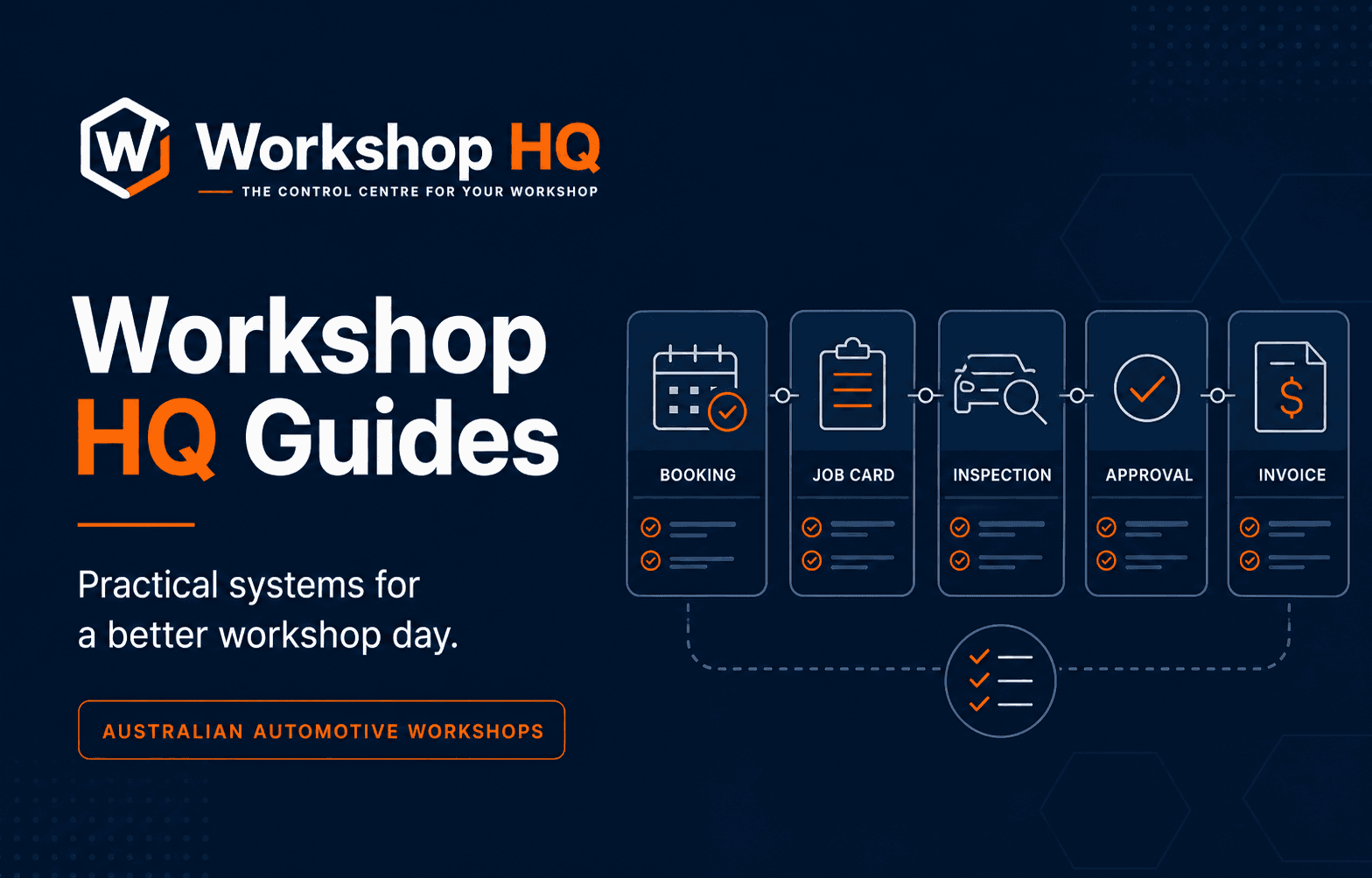
A diary, customer list, digital job card, inspection form and invoice can all work individually while the workshop still spends its day copying information. The real product is the handover between those functions. The customer concern must survive the booking. The technician finding must stay attached to the job. The customer's decision must change what can be completed and invoiced.
An operator feels those broken handovers immediately because someone has to repair them during a busy day. Reception rewrites a note. A technician walks to the office. A photo is searched for in a message thread. The owner reconstructs an invoice after the vehicle is finished. Operator-led design starts with eliminating those moments, then chooses the interface and data model needed to keep the work connected.
Reception pressure is a product-design input
Reception does not work from a clean sequence of one job at a time. The phone rings while a customer is at the counter, technicians need decisions, suppliers call back, approvals arrive and several vehicles share the same afternoon promise window. A booking calendar alone cannot explain which commitment is at risk or what action should happen next.
Someone who runs a workshop understands why expected completion, customer contact, current job stage, technician activity, parts blockers and approval status need to be read together. They also understand that a status must be truthful. Preparing labour or parts for a future booking should not make reception believe the car is already in progress. These details can seem small in a demonstration and become decisive at 3 pm on a full day.
Technician usability has to survive the workshop floor
A technician should not need to operate front-office software from a phone. The useful mobile view is deliberately focused: assigned jobs, concerns, clock controls, checksheets, measurements, notes, photos, video, internal messages and safe completion. Every extra step competes with the work on the vehicle.
Operator experience makes adoption a practical question rather than a training slogan. Can a technician record a fault while standing at the vehicle? Can the system prevent contradictory clock and job states? Does reception see the update without asking for it again? If the floor returns to paper or personal messages when the workshop becomes busy, the live record is no longer live, regardless of how polished the office dashboard looks.
Customer communication should reduce the trust gap
A motorist may be asked to approve work on a component they have never seen and do not understand. A verbal explanation can be honest and still leave the customer uncertain because the workshop has the technical knowledge and the physical evidence. Good workshop software should help close that information gap without forcing the customer to interpret a technical internal job card.
A clear customer view can present the relevant checksheet result, measurement, explanation, photo or video, recommended action and price together. The customer should be able to approve, decline or ask a question in that context. Designing this well requires understanding both sides of the counter: the technician must capture evidence efficiently, reception must control what is communicated and the customer needs a calm, understandable service story rather than a dump of workshop data.
Owners need the system to protect the whole business
Workshop ownership changes the questions asked of the product. It is not enough for a screen to save time. The owner needs to know who can access customer and vehicle data, who changed an important state, how optional charges are controlled, whether records can be exported and how a migration can be reviewed or rolled back when source data is poor.
Commercial continuity matters as well. Approved work should carry into a correct Australian invoice without reconstruction. Payments and balances need clear meaning. Reports must be based on daily records the team can realistically maintain. Operator-led software design keeps these business controls close to the workflow instead of treating them as administrative additions after the visible features are complete.
Direct feedback preserves the real problem
A workshop rarely begins with a perfect product specification. It describes a frustrating event: a promise time was missed because nobody saw the approval arrive, a technician had to enter the same measurement twice, or a customer could not understand why a recommendation mattered. The value is in the operational detail around that event.
When feedback passes through several disconnected layers, it can be reduced to a short ticket that describes a button rather than the workflow problem. Workshop HQ gives workshops a direct path to the founder and product decision-maker. Because that person understands the operating context firsthand, the conversation can stay focused on the outcome, the people affected and the connected records that would change.
Fast product progress still requires judgement
Direct access does not mean every request should ship immediately. Two workshops may solve the same problem differently. A local shortcut may make the product inconsistent for everyone else. A seemingly small change may affect permissions, invoice totals, audit history, mobile behaviour or customer-visible information.
The responsible advantage is shorter understanding and decision time. A useful idea can be evaluated by the person who knows the workflow and controls the product direction, then designed across the complete system. Testing still matters. The change should preserve tenant boundaries, protect private data, handle existing records and work on the devices people actually use before it becomes part of the live platform.
A useful operator-led feedback loop
The workshop begins with a real example and explains who was affected, what information was missing and what outcome was needed. The product lead tests whether the problem is common enough and important enough to solve in the shared product. The proposed design is then followed across reception, the floor, the customer view, invoicing and owner controls rather than added to one screen in isolation.
After implementation, the workflow is tested with representative records and normal complications. A release should be visible enough for workshops to understand what changed. A public changelog helps turn claims of rapid improvement into a record that can be inspected over time. It also gives future feedback a shared reference instead of making every conversation start from memory.
- Describe the operating event, not only the requested interface.
- Identify the staff member or customer who owns the next action.
- Trace the effect across the complete repair record.
- Test permissions, data, mobile use and existing workflows.
- Document the released improvement clearly.
How to test whether a vendor understands workshops
Ask the vendor to run a complicated but ordinary job rather than a clean feature tour. Prepare a future booking, change the promise time, assign work, record an inspection finding with evidence, request approval, receive a customer question, complete the authorised work and prepare the invoice. Then ask what each role sees at every stage.
Listen to the questions the vendor asks. A product team that understands workshop operation should care about responsibility, blockers, customer promises, technician interruption, data ownership and the handover into the next action. It should be able to explain trade-offs rather than agreeing that every request is simple. The quality of that reasoning can be more revealing than the number of settings on the screen.
What operator-built means for Workshop HQ
For Workshop HQ, operator-built means the platform is being shaped by 13 years of direct mechanical workshop ownership and ongoing day-to-day involvement. The founder is not separated from reception problems, technician needs or customer expectations by a theoretical product brief. Those realities are the environment in which the product is judged.
It also means the platform can keep moving. Good feedback can reach the person responsible for product direction directly, be understood in context and become a tested improvement without an uninterested chain of handovers. The ambition is not to add every idea. It is to keep building the most coherent, transparent and operationally useful workshop platform for Australian workshops as the product and its workshop community progress together.
Questions from workshops
Frequently asked questions
Who designed Workshop HQ?
Workshop HQ was designed by its founder and product lead, who owns and has operated a successful Australian mechanical workshop for 13 years and remains involved in day-to-day workshop operations.
Why does workshop ownership matter when designing software?
It gives product decisions firsthand operating context across reception, technicians, customers, invoicing and business ownership, including the handovers that isolated feature demonstrations can miss.
Can Workshop HQ users give feedback directly?
Workshop feedback can reach the founder and product decision-maker directly, allowing valuable ideas to be understood in their real workflow context without layers of support handovers.
Does Workshop HQ promise to implement every request instantly?
No. Useful ideas can move quickly, but each change still needs product judgement and appropriate workflow, data, access and regression testing before release.
About this guide
Published by the Workshop HQ product team
Workshop HQ publishes practical guidance from released product evidence, linked primary sources and the operating perspective led by founder Kyle Fryers, who has 13 years running a successful Australian mechanical workshop. Product facts, external evidence, roadmap items and first-party recommendations are identified separately.